Lola Dutronic

Something old, something new, something borrowed and something very blue from everyone’s favourite bilingual transatlantic electronic pop duo of Toronto-based Richard Citroen and vocalist (and Dusseldorf resident) Stephanie B.

The song is available from the pair’s Bandcamp site…with promise of a new album later this year!

Robi

20150208 Robi ArtworkChloé Robineau’s debut album “L’hiver et la Joie” – a stunningly atmospheric and at times dark and brooding, minimalist indie-pop album populated with synth keyboards and throbbing basslines – deservedly featured amongst 2013’s year-listed albums. And now a couple of years later Chloé – or Robi – as she is better known, is back with a brand new album “La Cavale”, that from the opening bars of “L’éternité” reveals a collection of songs which share the same dark and brooding themes as its predecessor and is again populated with minimalist synthesiser keyboards, stark bass lines and Robi’s deliberately monotonic yet hypnotically seductive vocals.

Yet you also start to notice the subtle changes that Robi manages to convey to the song with just some deft inflections to her voice, added guitar, cello and what sounds like orchestral horns (but which I suspect is just programmation) that provide both added substance and an analogue mellowness; the inherent coldness and unforgivingness of industrial synth-pop is replaced by a yielding warmth. Indeed, while the overall tone of this album is decidedly melancholic there are also some very clever touches displayed here -an unexpected sensuality to Robi’s voice on “Nuit de fête” that is expertly framed by the song’s melody, while “Danser” oozes romance and passion – a solitary spotlight following two dancers as they pirouette across a deserted dance floor.

The more that I’ve been listening to this album over the past week, so I’m convinced that “La Cavale” shares a kindred spirit with La Féline’s “Adieu L’Enface” and nowhere more so than with the haunting “A cet endroit” with its heavily reverbed guitar, analogue synths and melodic chorus.

“La Cavale” is a totally captivating and assured album, perfect for driving along a desolate two-lane flat top, searing headlights illuminating the dark, waiting for the moment daylight rescues us from the night’s grasp…

Ariane Moffatt

20150122 Ariane Moffatt PortraitAriane Moffatt is one of this blogs favourite artists,although apart from last year’s (wonderful) single “Soleil chaleur” things – at least on the musical front – have been quiet since 2012’s “MA” (although to be fair Ariane and partner Florence Marcil-Denault recently became parents) – but now she’s back – not only with a new single “Debout”, but also a new album “22h22”, scheduled to be released in March.

It’s only January, but I suspect you’ll have to go some to find a better example of dreamy, synth-pop as will be released this year. “Debout” is a stand-out dance-floor filler that brings to mind Fanny Bloom’s “Pan”, and is beautiful and heartfelt song to the power and triumph of love and relationships… Welcome back Ariane!

Rosie Valland

20150121 Rosie Valland PortraitAnd here’s yet another talented singer-songwriter from Québec…

Rosie Valland’s 2014 eponymous debut EP was a melancholic and atmospheric collection of autobiographical songs that created a vista of monochromatic landscapes. With the promise of an album to be released later this year, she’s back with an intriguing teaser in the shape of her new single, “Rebound.”

Similar to the themes of the earlier EP, “Rebound” again has an autobiographical and melancholy feel; but whereas Rosie’s earlier songs were painted with a monotone palette, here there feels as if a hint of colour and depth has been applied to the canvas – there are deft touches of brass and a hint of fragility to Rosie’s voice that evokes fellow Québécoise Salomé Leclerc.

Mauve Lunel

201501xx Mauve Lunel ArtworkPerhaps better known as a textile and graphic designer, “Le temps m’apaise” is the first track from aspiring singer-songwriter (and currently resident of Nantes) Mauve Lunel’s debut EP, “Décembre”, which is scheduled for release on February 26th.

The EP draws on her experiences of the last few years, split between the cities of Montréal (Mauve cut her musical teeth while a student at Cegeps – the general and vocational colleges of Québec – don’t sniff, artists of the calibre of Isabelle Boulay and Ariane Moffatt got their early breaks here), New Delhi (where the songs for her EP were written) and Paris, “Le temps m’apaise” is a calming acoustic folk-tinged pop song that highlights Mauve’s seductively hypnotic vocals.

La Féline

20141217 La Feline ArtworkSo I’d already drafted my album of the year when I recalled a post concerning Agnès Gayraud’s project La Féline. The EP in question, “Adieu l’enfance”, had recently morphed into a full-blown album, so I gave it a metaphorical spin… And the more I listened the more there was this nagging voice in the back of my head that kept telling me that this was a truly gr-r-eat album…

“Adieu l’enfance” is the most intoxicating mix of eighties-influenced dreamy electronic synth-pop, guitar-tinged indie-pop all mixed with spell-binding vocals; “Les fashionistes (au loin)”, outwardly a wry observation on the ‘sameness’ of the fashion police but actually that of the world viewed from the perception of the alienated outsider. The song’s hypnotic beat and Agnès’ breathless vocal style create a compelling soundtrack of a disturbingly dystopian landscape…


“La ligne d’horizon” features the most dreamy synth pop rhythms – complete with a haunting trumpet refrain with a touch of cello that add extra depth and poignancy to the coda; The album’s title track kicks-off with looped-vocals and the most gorgeous of synth-pop rhythms. The vocals are breathless – spellbinding – the chorus is uplifting – a song that does not so much regret the passing of a childhood moment as rejoice; “Zone”, with the must exhilarating – pounding – industrial synth soundtrack, that about half-way through seamlessly transformed into an indie-rock song.

Guitar-fuelled indie rock gets an airing with “Midnight”, a song that wouldn’t have sounded out of place on The Cure’s “Seventeen Seconds”; the beguiling a cappella “Rêve de Verre”, a resplendent multi-dubbed choir and a hymn to the loss of innocence and “La fumée dans le ciel” complete with gorgeous vibrato guitar that transports you back to the sixties (‘retromania’ as Agnès might say?)

The overall effect of this album is to create a succession of timeless song which expertly blended the familiar with the yet to be discovered. Indeed, the whole raison d’être of the album is captured by “Moderne”; melancholic and thoughtful, a manifesto to the belief that ‘new’ is in fact ‘old’ and newness is just a reinvention of the past. (Agnès touches upon the idea of ‘modern is old’ in the pages of her fascinating blog “Moderne, c’est déjà vieux” (“Modern it’s Already Old”).

“Adieu l’enfance” is, upon reflection, too good an album to pass up…

Best of 2014 (Part 7)

MusiqueFrancoWhat actually constitutes a “French” song? I thought about this while perusing an article in the French-Canadian blog L’Animateur Culturel! which – correctly – defines a French song as one that is performed in the language of Molière and not – as it is often incorrectly described – a style.

For me – a Francophone Englishman and someone who passionately believes that a great song actually transcends language – a great French song is actually a great song that just happens to be performed in French. Conversely, I’m not just going to love a song just because the artist happens to be performing the song in French… There has to be a certain “je ne sais quoi” in the first place to whet the appetite.

And because I’ve already decided that it’s a great song, whatever the particular genre (be it pop, alt-rock, indie, folk, etc… depending on what is rocking my particular boat) it is always going to stand comparison against any song, irrespective of language…

“La musique en français c’est n’est pas un style de musique. Y’a de tout en français!” (“Music in French is not a style of music. They are all in French!”)

So when it came to selecting a song of the year – which in many respects is actually far easier than choosing an album (you’re looking at one moment of sheer brilliance as opposed to a degree of consistency over a number of tracks) – I was looking for that one moment that not only perfectly encapsulates the artist, but also would stand shoulder to shoulder with any other song in a similar category that was released this year…

201412xx Filles Sourires ArtworkI’d actually got a short-list of three(!), but ultimately – and having long bemoaned the dearth of innovative French (or french-Canadian) indie-rock artists – there can be only one song of the year.

Hôtel Morphée’s “Dernier jour” is a dark and deliciously subversive thumping alt-rock tune; all pounding drums and repetitive bass overlaid with Laurence Newbornne’s gorgeous rasping, sultry vocals… And then the refrain kicks in, the vocals soar, imploring, there’s a ferocity – at times animalistic edginess here… All of a sudden those trademark syncopated rhythms of orchestral strings are centre-stage. The song literally explodes between the ears… and then it’s gone… replaced by silence… the heart is still pounding…

Best of 2014 (Part 4): Stéphanie Lapointe

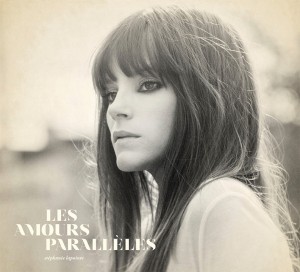
20141112 Stephanie Lapointe ArtworkIt is safe to say that 2014 has produced a bumper crop of Francophone albums. Many of these have appeared in this very blog and some have even been reviewed by yours truly. Mentally I’m whittling a year’s worth of albums to a top 10… And then Guuz announces that this year we’re going to only nominate one album… just one… our choice for the album of 2014…

So… I’ve thought long and hard about my choice and so with apologies to Hôtel Morphée, Chloé Lacasse, Catherine Leduc and Salomé Leclerc, to name but a few of my top 10 – all of whom are arguably responsible for some of the great albums of this (or any) year. Somehow though I already knew the other nine albums on my list were going to be (very, very) good and I was already anticipating their release. Hopefully someone will nominate them (if not you’ll be able to read about them again elsewhere), but my album of the year has to be the one that not only was I totally unprepared for, but also – and to quote Guuz himself – left me more than a little bit shaken in the process…

Montréalaise singer-actress-author and Unicef ambassador Stéphanie Lapointe released her last album back in 2009. This year she released “Les amours parallèles”, an album that manages to both immediately transport the listener back to les années soixante while at the same time brimming with such timeless quality that the songs here could have been written anytime over the past fifty years. Over ten intimate portraits that describe the many facets of love; good and bad, escape, forgiveness, loss, grief and desire, a brief moment in time has been captured and frozen for all eternity.

Actually if there is an award for team album of the year, then “Les amours parallèles” is the undisputed winner. Already armed with a honey-dripped and mesmerising voice that would be described as nailed-on Fille Fragile, Stéphanie surrounded herself amongst the crème of Québec’s song-writing and composing talent; Philippe B – winner of two Félix at this year’s ADISQ Gala; Jimmy Hunt – GAMIQ award winner and Polaris nominee; award winning poet Kim Doré alongside Émilie Laforest and Joseph Marchand of blog favourites, Forêt, who were also responsible for the album’s production.

From the opening number, the Philippe B composition, “L’oiseau mécanique”, with it’s poignant piano melody and Stéphanie’s voice softly floating above the clouds to the haunting resonance of the English horn on the closing “Nous revenons de loin”, this is an album of terrifying consistency.

The album feels very French – and while it’s not impossible to imagine this album being written and performed in (say) English – it resonates with “Frenchiness” and the echoes of Françoise Hardy, France Gall and Jane Birkin (whose “Pourquoi” has been lovingly reinterpreted here); yet for an album that has a distinctly retro-sixties feel (indeed, even the album artwork harks back to the period), there’s only one song here, “Un jour comme un autre”, that is actually from that era. Originally performed by Brigitte Bardot on her 1964 album “BB”, here the nuances of Stéphanie’s voice perfectly captures the feeling of resignation and despair.

Mention has to be made of the two stunning duets on the album – both written and composed by their respective co-vocalists. The haunting “De mon enfance” is graced by the angelic harmonies of Stéphanie and Philémon Cimon and the only English-language offering, Leif Vollebekk’s “Not a moment too soon”, an incredibly haunting song of sombre and imposing orchestral strings, gentle soothing piano and arresting vocals.

There are also some incredibly thoughtful touches that help bind the songs on this album – heavenly choirs flit in and out of the spotlight, the arrangements – be it strings, piano or acoustic guitar – all perfectly capture the particular mood of a song.

“Les amours parallèles” is a gorgeous concept album that revolves around the theme of love in all of its many guises. It is also nothing short of a masterpiece and deserved of consideration as album of the year 2014.
Nadine Shah

Nadine  ShahIn the UK, Nadine Shah has often been compared by music journalists with the likes of P J Harvey and Nick Cave – not exactly artists that you would usually associate with this blog – but I’m indebted to “Gypsy, Death and You” for tweaking my inner indie demon and introducing me to her.

Born on Tyneside to Pakistani-Norweigian parents, as a teenager Nadine moved to London to carve out a career as a jazz-singer. Possessing a voice of frightening intensity (and a haunting style that is at least part-based on her father’s interpretation of traditional Ghazal and religious Sufi songs), she has wowed with her own unique style that conjures up stark, brooding aural landscapes.

Last year she released her critically-acclaimed debut album, “Love Your Dum and Mad” and an EP “Dreary town”, an incredibly poignant and moving song that charts the unravelling of a relationship, as it stales and spirals into the depths amidst recriminations, jealousy, empty wine bottles and cigarette butts…

Earlier this year Nadine re-recorded the song in French as “Ville Morose”, with new lyrics that provide an even darker attraction. This version received rave reviews amongst French Bloggers (here and here); even Nadine was moved to comment that the French lyrics not only gave the song a a different flavour but that it sounds even better in French than in English…

“Ville Morose” demonstrates that not only is Nadine Shah an exceptional songwriter in either English and French, but also adds further proof that a great song will always transcend a linguistic divide. More importantly it demonstrates that not only is she a fantastic singer with the most mesmerising of voices, she’s also a Chanteuse.

Catherine Valéry

20141123 Catherine Valery ArtworkCatherine Valéry is yet another graduate from the production line that is Quebec’s l’École Nationale de la Chanson de Granby (Laura Babin, Véronique Bilodeau and Geneviève Racette have all featured in this very blog) who released her eponymous EP through Bandcamp back in May.

The EP is short and sweet (there’s only four songs here) but it’s full of beautifully crafted and seemingly effortless sensual, bitter-sweet chansons that are a perfect vehicle for Catherine’s crystalline yet velvety smooth voice, as the video for the haunting “Dors” shows.

In her native Quebec, Catherine is already beginning attract favourable reviews for her music. Hopefully Francophone Europe will begin to take notice.