Dia de Los Muertos (3)

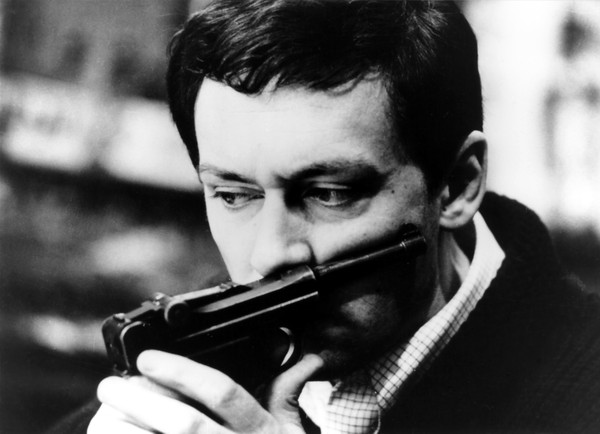
There probably will be no music at my real funeral. I’d rather prefer a reading of the last three pages of Pierre Drieu la Rochelle’s Le feu follet. However, at my fictitious funeral this All Saints’ Monday, my future ghost will engulf in the kitsch grandeur of the English version of Le Moribond. Jacques Brel’s 1961 original is a bit too snappy for my tastes, and Terry Jacks’s 1974 smash hit adaptation – originally to be recorded by the Beach Boys (!) – well, let’s put a shroud over it. The ultimate version is undoubtedly by Rod McKuen, close Brel friend and translator of many of his lyrics. His rugged-voice US version, adapted first by the Kingston Trio in 1964, sentimentalizes Brel’s chanson for sure, and simultaneously transforms it into big-scope American death disc drama. Paradoxically, the starfish on the beach granted him a nice bit of immortality.
Rod McKuen – Seasons in the Sun

Dia de los muertos (2)

Short but sweet guestpost in honour of the Day of the Dead (2/11) by Anna Maria:

Gainsbourg wearily hisses at the man who stole his Jane in a sunny setting, but his words sting with acidic intent. Perhaps he didn’t really wish for his rivals’ death but he sure liked to vent a little. A good song to wish for the worst for your enemies, and then maybe forgive them and move on. And maybe you’ll remember the ones you can no longer see and miss them a little too.

Serge Gainsbourg – Vieille Canaille

This is the original version, by the way.

Dia de los muertos (1)

Today and tomorrow I will post several guestposts in honour of Dia de los muertos, the Day of the Dead (November 2) or All Souls Day. French songs, of course. Sylvester kicks off with dead leaves on dirty ground.

Death brings so many sweet melodies to my mind. It was one the favourite themes of Jacques Brel (‘Mourir la belle affaire. Mais Vieillir… ô vieillir!’); Léo Ferré immortalised his deceased monkey Pepée in a song; Renaud scolded the Putain de camion which killed his friend Coluche in a motor accident; a heartbroken Serge Reggiani sang La barbe à papa in dedication to his son, who committed suicide a year earlier; Barbara unforgettably memorized a visit to her dying father in Nantes – he had already passed away when she arrived… Oh… Hallelujah! So many lovely chansons death has brought upon us!

My all-time favourite was an offspring of the renowned artistic collaboration of composer Jacques Kosma and poet Jacques Prévert. Together they wrote not only the evergreen Les feuilles mortes (Autumn leaves), but also Barbara. Melancholically, a man remembers the happy smile of a young girl he once saw in Brest. It was shortly before the war, which brought death and destruction to the city. What will have happened to this girl – Barbara? Like Les feuilles mortes, this song was made famous by Yves Montand, but I prefer the even more sober interpretation by Les Frères Jacques.

Les Freres Jacues – Barbara

FS Rerun: Lai Going Lesbian

Clever stunt: When Les Chansons de Bilitis came out in 1894, Pierre Louys claimed to be the translator of those erotic verses written by an unknown ancient Greek poetess, and caused a literary sensation. Lesbianism was hot then, but eighty years later it became even hotter, when soft-focus lensman David Hamilton used the classic poetry touch as a camouflage to display loads of nubile skin in his „adaptation“ of the Bilitis poems that Louys had written himself, of course. Though the flick stars Patty D’Arbanville (see right) and other fragile b-cup maidens, the real star of the movie was Francis Lai’s soundtrack – the work of a true daydream believer, and surely among his finest hours.

Francis Lai – Promenade

Extra: It feels like we have posted Kahimi Karie’s version of Momus’s tender pervert classic David Hamilton a thousand times, so here’s the cover by Laila France, also a Momus protégé, from 1997.

Laila France – David Hamilton

Les Hommes Sauvages: Vive la Trance

Someone who writes a song about literary enfant terrible Jean Genet must be a friend of mine. Berlin-based guitarist Kristof Hahn actually is and did so for the brand-new, third album by Les Hommes Sauvages: „Vive la Trance“ alternates between brooding melancholy, heavy electrical storms, and impressionistic after-the-rain moments, a style Hahn and girlfriend Viola Limpet (vocals) have termed Rock’n’Roll Noir, embracing songs by Lee Hazlewood and John Cale along the way and making them completely their own. The album also features three French language originals, penned by Hahn and Gallic poet Eric LeMarechal, including the aforementioned hommage to Genet, and the serenely floating Au dessus de la ville, with a referential wink and a smile towards Blue Oyster Cult’s Don’t Fear the Reaper.

If you happen to live in Albion, you can see Monsieur Hahn, who has also played with the likes of Alex Chilton or Chris Spedding, accompanying Michael Gira and post-punk-gods The Swans at various big venues in the next days. Plus: French/ German TV channel Arte shows the documentary Mein halbes Leben/ Ma demi-vie on Oct 29, 22.20 h (Germany) and 22:45 h (France), with a fine soundtrack by Hahn and Limpet.

Photo by Stephan Schmidt. The album can be ordered via the Hommes Sauvages website.

Les Hommes Sauvages – Jean Genet

Les Hommes Sauvages – Au dessus de la ville

Baba & Roody

Cheese time! Serge Gainsbourg once said (in an interview with Les Inrocks) that he took inspiration from ‘dirty songs for blackies’ for the immortal ‘Je t’aime… moi non plus’. A derogatory remark? No, if you know anything about Serge (he defended his all black band famously against raving mad war veterans when he was on tour promoting his reggae-fied version of the French national anthem) and the history of black music. Blues, for instance, has a long tradition of raunchy, sexual explicit songs. This compilation can enlighten you. If Baba and Roody were following that tradition, or Gainsbourgs guiding sexual light, I dunno. In fact, I don’t know anything about this French duo. They had a top 20 hit in the Netherlands in 1979 with the pant-and-growl-fest Hacka Tacka Music. They became legendary when the top of the girl singer (Roody, I guess) came down during a performance on TopPop, Holland’s own Top of the Pops. Here’s a clip of that, the money shot is right before the end. One can only guess if Italian singer Sabrina took inspiration from that moment.
The b-side of Hacka Tacka Music is a French version, called La Musique Exotique. Google couldn’t tell me if that was a hit in France. But is was co-written by Charles Level, who also wrote songs for Dalida, Chantal Kelly and Sacha Distel. Maybe follow-up Doctor, Doctor was a hit in France? You guessed it, it’s playing doctor set to reggae music. I’d love to hear that one. Once.

Baba & Roody – La musique exotique

Dutch funny man/pop-exploitationist Dingetje made this parody of Baba & Roody:
Dingetje & Co – Reggae met een rumboon
Weird-but-good Dutch rockband It Dockumer Lokaeltsje also covered Hacka Tacka Music:
It Dockumer Lokaeltsje – Hacka Tacka Music

FS Vintage: Luiz Bonfá Meets Charles Trénet

Let’s take a trip to Rio on this late Monday night. Luiz Bonfá isn’t exactly a household name, but in the 50s and 60s, he played guitar for and with Joao Gilberto, Sergio Mendes, Stan Getz, George Benson, and Frank Sinatra, and wrote Almost in Love for Elvis. In 1956, he collaborated with pianiste extraordinaire Ed(uardo) Lincoln on Noite e Dia, which contains a most easygoing and highly artistic instrumental version of Charles Trénet’s 1942 classic Que reste-t’il de nos amours. My friend Matthias knows the lyrics by heart. A perfect way to attract them filles.

Luiz Bonfá/ Ed Lincoln – Que reste-t’il de nos amours

Charles Trenet – Que reste-t’il de nos amours

Elvis – Almost in Love

Bonus: Bonfá’s biggest own composition was the bossa classic Manha de Carnaval, a favorite (not only) among French songbirds:

Marina Celeste – Manha de Carnaval

Keren Ann – Manha de Carnaval

Sylvia Telles – Manha de Carnaval

Joanie Summers w/ Laurindo Almeida – Manha de Carnaval

Claudine Longet – Manha de Carnaval