FS Rerun: The Other Serge

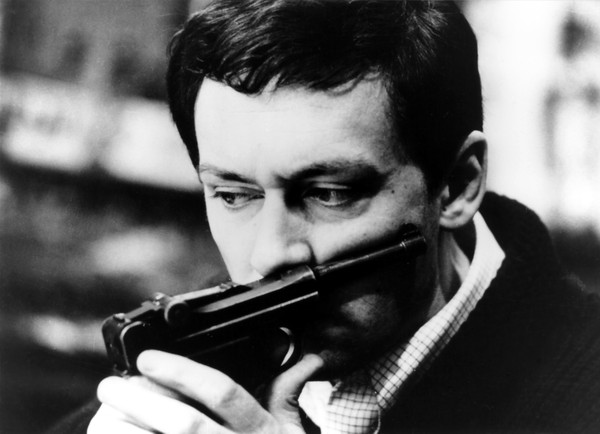
Casque d’or, La ronde, Le doulos, L’armée des ombres: Serge Reggiani  was already a highly acclaimed star of the French silver screen when he – encouraged by Simone Signoret and Yves Montand – turned to singing in 1965 with SR chante Boris Vian. His chef d’œuvre may well be Rupture (1971; see right) – a brilliant album oscillating between grand melancholy, mild cynicism and mature knowledge unsurpassed in the history of French song. La putain combines Reggiani’s unique phrasing with a perfectly arranged composition by Michel Legrand and the classy poetic imagery of lyricist Jean-Loup Dabadie – a 3:42 min short story about the lost bird of youth and those secrets behind the jalousies.

Serge Reggiani – La putain

Bonus: Serge G. with his seldom-played take on whores from the soundtrack of Just Jaeckin’s 1977 soft-porn flick Madame Claude (PG recommended), with a wink and a sneer towards Bach’s Jésus, que ma joie demeure.

Serge Gainsbourg – Putain que ma joie demeure

Ooh Canada II: Nikki Darling

When Nikki Yanofsky appeared at the Montreal Jazz Festival in 2006, she was twelve years old; the following year, she was the youngest singer ever to appear on a Verve record, and showroom schmaltzmeister Tony Bennett regards her as the reincarnation of Judy Garland. No surprise that Barry Manilow producer Phil Ramone and Norah Jones associate Jesse Harris took over for her studio debut „Nikki“, another one of those sleek Fräuleinwunder sedatives that are played at my hairdresser’s all the time. Actually, Nikki’s album is quite well-perfumed, featuring even a few lines in French on the perfectly arranged Bienvenue dans ma vie, including an Art van Damme meets Amélie format accordion and un peu de scat vocal showoff. If you’re into more spoiled Nikkis, check the classic below.

Nikki Yanofsky – Bienvenue dans ma vie

Prince – Nikki Darling

Tahiti Breeze: L’étoile oubliée de Vaea Sylvain

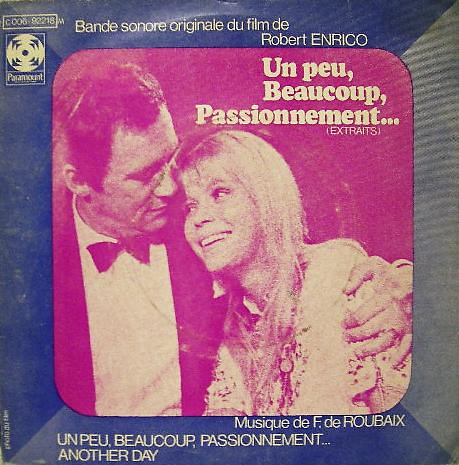
At age 16, Vaea Sylvain (see right in 1970) became Polynesian slalom waterskiing champion in 1966. Close kin to the sea, she was the ideal collaborator for film composer and avid diver François de Roubaix. Together, they recorded the title song for Robert Enrico’s 1968 movie Un Peu, Beaucoup, Passionnément … – a très jolie, tenderly floating song with an alluring touch of Rio, available on François de Roubaix: Chansons de Films. Today, Vaea, who began painting in 1972, is an acclaimed artist living in Tahiti again, highly praised by the likes of Robert Bolt, Roland Topor, or the late 60s ladies connaisseur Roger Vadim, who obviously fell for her right away: „Vaea is beautiful. Her long legs, slender waist, captivating blue-green eyes, her androgynous bust are proof that beauty blends with talent, courage, and intelligence.“ Don’t miss Vaea’s extensive website including its huge photo gallery, surely a Who’s Who of the last fifty years.

Vaea Sylvain – Un peu, beaucoup, passionnément …

FS Rerun: Todd Bishop

Still sexy after a whole year. On 69 Année Erotique: Todd Bishop’s Pop Art 4 Plays the Music of SG, Portland-based drummer Bishop and his crew reinvent the title track as an Andy Williams lounge showtune finally evolving into a lysergic spacescape, transform Le Walkie Talkie into a fusion orgy, and resurrect Initials B.B. with surf guitar reverb, funky licks, raucous sax and the whispered vocals of Casey Scott, otherwise singer of Portland’s Red Venus Love Army – Miss Sexy Voice 2009 for sure. Actually, American jazz reviewers were so intoxicated by the album that they began to improvise about „Jane Birken“ and „Bridgette Bardot“; they really have some cool scribes over there.

Todd Bishop – 69 Année Erotique

Todd Bishop w/ Casey Scott – Initials B.B.

Dia de Los Muertos (3)

There probably will be no music at my real funeral. I’d rather prefer a reading of the last three pages of Pierre Drieu la Rochelle’s Le feu follet. However, at my fictitious funeral this All Saints’ Monday, my future ghost will engulf in the kitsch grandeur of the English version of Le Moribond. Jacques Brel’s 1961 original is a bit too snappy for my tastes, and Terry Jacks’s 1974 smash hit adaptation – originally to be recorded by the Beach Boys (!) – well, let’s put a shroud over it. The ultimate version is undoubtedly by Rod McKuen, close Brel friend and translator of many of his lyrics. His rugged-voice US version, adapted first by the Kingston Trio in 1964, sentimentalizes Brel’s chanson for sure, and simultaneously transforms it into big-scope American death disc drama. Paradoxically, the starfish on the beach granted him a nice bit of immortality.
Rod McKuen – Seasons in the Sun

FS Rerun: Lai Going Lesbian

Clever stunt: When Les Chansons de Bilitis came out in 1894, Pierre Louys claimed to be the translator of those erotic verses written by an unknown ancient Greek poetess, and caused a literary sensation. Lesbianism was hot then, but eighty years later it became even hotter, when soft-focus lensman David Hamilton used the classic poetry touch as a camouflage to display loads of nubile skin in his „adaptation“ of the Bilitis poems that Louys had written himself, of course. Though the flick stars Patty D’Arbanville (see right) and other fragile b-cup maidens, the real star of the movie was Francis Lai’s soundtrack – the work of a true daydream believer, and surely among his finest hours.

Francis Lai – Promenade

Extra: It feels like we have posted Kahimi Karie’s version of Momus’s tender pervert classic David Hamilton a thousand times, so here’s the cover by Laila France, also a Momus protégé, from 1997.

Laila France – David Hamilton

Les Hommes Sauvages: Vive la Trance

Someone who writes a song about literary enfant terrible Jean Genet must be a friend of mine. Berlin-based guitarist Kristof Hahn actually is and did so for the brand-new, third album by Les Hommes Sauvages: „Vive la Trance“ alternates between brooding melancholy, heavy electrical storms, and impressionistic after-the-rain moments, a style Hahn and girlfriend Viola Limpet (vocals) have termed Rock’n’Roll Noir, embracing songs by Lee Hazlewood and John Cale along the way and making them completely their own. The album also features three French language originals, penned by Hahn and Gallic poet Eric LeMarechal, including the aforementioned hommage to Genet, and the serenely floating Au dessus de la ville, with a referential wink and a smile towards Blue Oyster Cult’s Don’t Fear the Reaper.

If you happen to live in Albion, you can see Monsieur Hahn, who has also played with the likes of Alex Chilton or Chris Spedding, accompanying Michael Gira and post-punk-gods The Swans at various big venues in the next days. Plus: French/ German TV channel Arte shows the documentary Mein halbes Leben/ Ma demi-vie on Oct 29, 22.20 h (Germany) and 22:45 h (France), with a fine soundtrack by Hahn and Limpet.

Photo by Stephan Schmidt. The album can be ordered via the Hommes Sauvages website.

Les Hommes Sauvages – Jean Genet

Les Hommes Sauvages – Au dessus de la ville

FS Vintage: Luiz Bonfá Meets Charles Trénet

Let’s take a trip to Rio on this late Monday night. Luiz Bonfá isn’t exactly a household name, but in the 50s and 60s, he played guitar for and with Joao Gilberto, Sergio Mendes, Stan Getz, George Benson, and Frank Sinatra, and wrote Almost in Love for Elvis. In 1956, he collaborated with pianiste extraordinaire Ed(uardo) Lincoln on Noite e Dia, which contains a most easygoing and highly artistic instrumental version of Charles Trénet’s 1942 classic Que reste-t’il de nos amours. My friend Matthias knows the lyrics by heart. A perfect way to attract them filles.

Luiz Bonfá/ Ed Lincoln – Que reste-t’il de nos amours

Charles Trenet – Que reste-t’il de nos amours

Elvis – Almost in Love

Bonus: Bonfá’s biggest own composition was the bossa classic Manha de Carnaval, a favorite (not only) among French songbirds:

Marina Celeste – Manha de Carnaval

Keren Ann – Manha de Carnaval

Sylvia Telles – Manha de Carnaval

Joanie Summers w/ Laurindo Almeida – Manha de Carnaval

Claudine Longet – Manha de Carnaval

What’s the Point of Loving?

On Oct 9, 1962, chanson ueber-legend Edith Piaf, who was already critically ill at the time, married French singer Théo Sarapo, twenty years younger than her. During the twelve months they had left together, they scored a huge international hit with A quoi ca sert l’amour – here’s also documented who wore the pants in their relationship. Márcio Faraco’s 2008 album Um Rio features a classy bossa version of the all-too-seldom covered song, easygoing, laid-back and finding the point in the Brazilian lightness of being.

Márcio Faraco – A quoi ca sert l’amour

Ulrich T. Does Charles T.

Even the good old Deutsche Grammophon label – once home of Herbert von Karajan, Daniel Barenboim, or Claudio Abbado – doesn’t offer the same quality choice anymore. Meanwhile, they have broadened their product range a bit: Recently they signed Ulrich Tukur, German tv cop for Europe’s probably worst crime show Tatort and a grandmaster of the overacting art, and produced his song album Mezzanotte, which contains a lovely duet with 90-years-old German movie legend Margot Hielscher, an unscrupulous raping of Friedrich Hollaender’s wonderful and immortal Illusions, and even two French numbers, one of which is a stiff and stilted carnival version of Charles Trenet’s nonchalantly charming 1939 chanson Le soleil et la lune. And history is repeating: In 1940, German troops did to France what Tukur is doing to Trenet in 2010.

Ulrich Tukur – Le soleil et la lune