French Christmas Corn

Remember those December 24 days when you had to earn your presents? When your Mom put on some record and you were forced to sing along to some way uncool tunes about silent nights, trickling snowflakes and the birth of Christ?  This year, you can show your kids that Christmas is some serious issue: With Annie Lennox’s brand new album A Christmas Cornucopia, chock-full of devotional, stone cold sober hymns from the eurythmical realm where camp and Kunstlied meet. Caution: Do not play after Christmas dinner. The content of your stomach might take its toll.

Annie Lennox – Il est né le divin enfant

Nice version from 2007:

Tom Tom Club – Il est né le divin enfant

Le Pop 6

Though Messieurs Oliver Fröschke and Rolf Witteler operate from Cologne’s Quartier Belge, they have an avid schtick for music from France. True heroes, the German slacker impresarios were among the very first to discover the charm of the Nouvelle Scène Francaise in 2002 – the first Le Pop compilation (featuring Burgalat, Keren Ann and Benjamin B.) was nothing less than a revelation and sold a felt one million copies in my neighborhood. Eight years and four follow-ups later, Le Pop 6 maybe doesn’t contain the same sense of wonder, but a bag of goodies all the way, featuring premier stuff like Tom Poisson’s countryfied „Trapéziste“, Marianne Dissard’s slowly building groove-fest „The One and Only“, and my favorite, Toma’s „Je bois la mer“, a solemn recapturing of old school electronica, and a splendid love song.

Toma – Je bois la mer

Pop Bâtard XV: C’est le vent, Serge

“Mash ups/ Bastard pop is a musical genre which, in its purest form, consists of the combination (usually by digital means) of the music from one song with the acapella from another. Typically, the music and vocals belong to completely different genres. At their best, bastard pop songs strive for musical epiphanies that add up to considerably more than the sum of their parts”, writes Markyboy on his highly recommended website, and if you’re not familiar with the genre, that’s quite a spot-on definition. On Je t’aime quand le vent souffle, he fuses Serge’s everlasting “Every time I put my shirt back on, she takes it off again” hymn to BB with I’ll Leave When the Wind Blows by Oklahoma neo-soft rockers All American Rejects. A smooth one which works just fine.

Markyboy – Je t’aime quand le vent souffle

FS Rerun: La Valente

This one appeared for the first time on the old blog in our Cahiers du Cinéma series, without the new extras.

Italian brunette Caterina Valente isn’t very famous for her movies, though she appeared in a good dozen, her first one being the prostitution melodrama Party Girls for Sale a.k.a. They Were So Young – released in 1954, the same year she hit it grand with her German version of Cole Porter’s I Love Paris, re-titled Ganz Paris träumt von der Liebe (The Whole of Paris Dreams of Love) and selling more than half a million copies.

Most of Valente’s hits came from the German Schlager alley, a back street of pop most people rightly fear to tread. However, Bonjour Kathrin from the same-titled 1956 Valente movie is a charming example of how to fuse a German language song with French flair. No wonder: Actually La Signora had started out à Paris, and in the late 50s came back with some recordings in French, among them the irresistible Un p’tit Béguine – supremely seductive stuff, easily on a par with the divine Connie Francis who also took her turn at Gallic sentiments in 1965.

Caterina Valente – Bonjour Kathrin

Caterina Valente – Un p’tit Béguine

Connie Francis – La vie en rose


Bonus speziale: Caterina’s French language version of the all-time classic Fever, written in 1955 by Otis Blackwell, first recorded by bluesman Little Willie John a year later and immortalized by Peggy Lee in 1958. When Caterina is talking trente-neuf, it sounds like a position Peggy never knew.

Caterina Valente – 39 de fièvre

Bonus extra speziale: La Valente’s French version of Paul Anka’s Put Your Head on my Shoulder. Sighing sighs, holding hands.

Caterina Valente – Prouve-moi que tu m’aimes
FS Rerun: The Other Serge

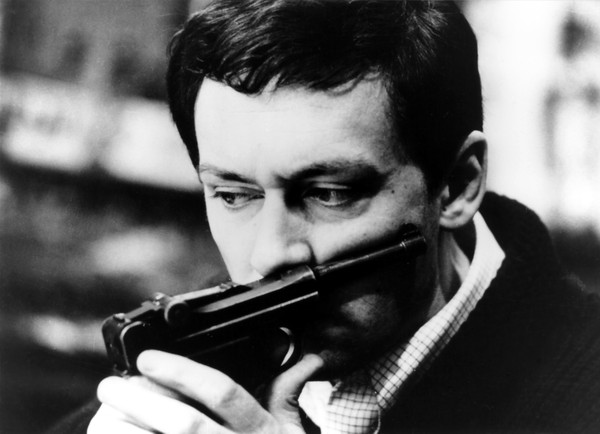
Casque d’or, La ronde, Le doulos, L’armée des ombres: Serge Reggiani  was already a highly acclaimed star of the French silver screen when he – encouraged by Simone Signoret and Yves Montand – turned to singing in 1965 with SR chante Boris Vian. His chef d’œuvre may well be Rupture (1971; see right) – a brilliant album oscillating between grand melancholy, mild cynicism and mature knowledge unsurpassed in the history of French song. La putain combines Reggiani’s unique phrasing with a perfectly arranged composition by Michel Legrand and the classy poetic imagery of lyricist Jean-Loup Dabadie – a 3:42 min short story about the lost bird of youth and those secrets behind the jalousies.

Serge Reggiani – La putain

Bonus: Serge G. with his seldom-played take on whores from the soundtrack of Just Jaeckin’s 1977 soft-porn flick Madame Claude (PG recommended), with a wink and a sneer towards Bach’s Jésus, que ma joie demeure.

Serge Gainsbourg – Putain que ma joie demeure

Ooh Canada II: Nikki Darling

When Nikki Yanofsky appeared at the Montreal Jazz Festival in 2006, she was twelve years old; the following year, she was the youngest singer ever to appear on a Verve record, and showroom schmaltzmeister Tony Bennett regards her as the reincarnation of Judy Garland. No surprise that Barry Manilow producer Phil Ramone and Norah Jones associate Jesse Harris took over for her studio debut „Nikki“, another one of those sleek Fräuleinwunder sedatives that are played at my hairdresser’s all the time. Actually, Nikki’s album is quite well-perfumed, featuring even a few lines in French on the perfectly arranged Bienvenue dans ma vie, including an Art van Damme meets Amélie format accordion and un peu de scat vocal showoff. If you’re into more spoiled Nikkis, check the classic below.

Nikki Yanofsky – Bienvenue dans ma vie

Prince – Nikki Darling

Tahiti Breeze: L’étoile oubliée de Vaea Sylvain

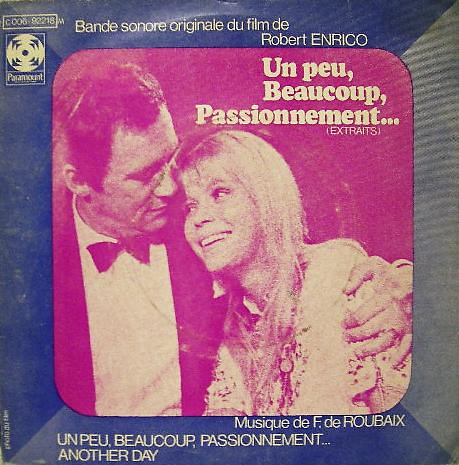
At age 16, Vaea Sylvain (see right in 1970) became Polynesian slalom waterskiing champion in 1966. Close kin to the sea, she was the ideal collaborator for film composer and avid diver François de Roubaix. Together, they recorded the title song for Robert Enrico’s 1968 movie Un Peu, Beaucoup, Passionnément … – a très jolie, tenderly floating song with an alluring touch of Rio, available on François de Roubaix: Chansons de Films. Today, Vaea, who began painting in 1972, is an acclaimed artist living in Tahiti again, highly praised by the likes of Robert Bolt, Roland Topor, or the late 60s ladies connaisseur Roger Vadim, who obviously fell for her right away: „Vaea is beautiful. Her long legs, slender waist, captivating blue-green eyes, her androgynous bust are proof that beauty blends with talent, courage, and intelligence.“ Don’t miss Vaea’s extensive website including its huge photo gallery, surely a Who’s Who of the last fifty years.

Vaea Sylvain – Un peu, beaucoup, passionnément …

FS Rerun: Todd Bishop

Still sexy after a whole year. On 69 Année Erotique: Todd Bishop’s Pop Art 4 Plays the Music of SG, Portland-based drummer Bishop and his crew reinvent the title track as an Andy Williams lounge showtune finally evolving into a lysergic spacescape, transform Le Walkie Talkie into a fusion orgy, and resurrect Initials B.B. with surf guitar reverb, funky licks, raucous sax and the whispered vocals of Casey Scott, otherwise singer of Portland’s Red Venus Love Army – Miss Sexy Voice 2009 for sure. Actually, American jazz reviewers were so intoxicated by the album that they began to improvise about „Jane Birken“ and „Bridgette Bardot“; they really have some cool scribes over there.

Todd Bishop – 69 Année Erotique

Todd Bishop w/ Casey Scott – Initials B.B.

Dia de Los Muertos (3)

There probably will be no music at my real funeral. I’d rather prefer a reading of the last three pages of Pierre Drieu la Rochelle’s Le feu follet. However, at my fictitious funeral this All Saints’ Monday, my future ghost will engulf in the kitsch grandeur of the English version of Le Moribond. Jacques Brel’s 1961 original is a bit too snappy for my tastes, and Terry Jacks’s 1974 smash hit adaptation – originally to be recorded by the Beach Boys (!) – well, let’s put a shroud over it. The ultimate version is undoubtedly by Rod McKuen, close Brel friend and translator of many of his lyrics. His rugged-voice US version, adapted first by the Kingston Trio in 1964, sentimentalizes Brel’s chanson for sure, and simultaneously transforms it into big-scope American death disc drama. Paradoxically, the starfish on the beach granted him a nice bit of immortality.
Rod McKuen – Seasons in the Sun

FS Rerun: Lai Going Lesbian

Clever stunt: When Les Chansons de Bilitis came out in 1894, Pierre Louys claimed to be the translator of those erotic verses written by an unknown ancient Greek poetess, and caused a literary sensation. Lesbianism was hot then, but eighty years later it became even hotter, when soft-focus lensman David Hamilton used the classic poetry touch as a camouflage to display loads of nubile skin in his „adaptation“ of the Bilitis poems that Louys had written himself, of course. Though the flick stars Patty D’Arbanville (see right) and other fragile b-cup maidens, the real star of the movie was Francis Lai’s soundtrack – the work of a true daydream believer, and surely among his finest hours.

Francis Lai – Promenade

Extra: It feels like we have posted Kahimi Karie’s version of Momus’s tender pervert classic David Hamilton a thousand times, so here’s the cover by Laila France, also a Momus protégé, from 1997.

Laila France – David Hamilton