Tahiti Breeze: L’étoile oubliée de Vaea Sylvain

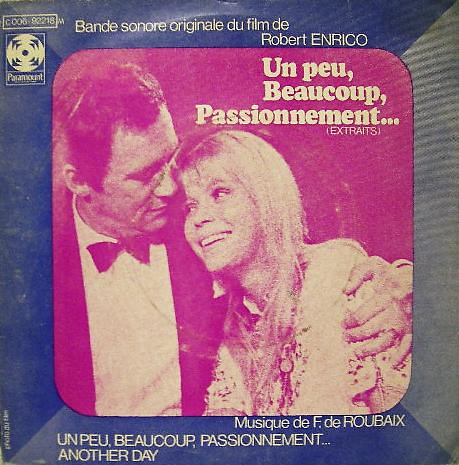
At age 16, Vaea Sylvain (see right in 1970) became Polynesian slalom waterskiing champion in 1966. Close kin to the sea, she was the ideal collaborator for film composer and avid diver François de Roubaix. Together, they recorded the title song for Robert Enrico’s 1968 movie Un Peu, Beaucoup, Passionnément … – a très jolie, tenderly floating song with an alluring touch of Rio, available on François de Roubaix: Chansons de Films. Today, Vaea, who began painting in 1972, is an acclaimed artist living in Tahiti again, highly praised by the likes of Robert Bolt, Roland Topor, or the late 60s ladies connaisseur Roger Vadim, who obviously fell for her right away: „Vaea is beautiful. Her long legs, slender waist, captivating blue-green eyes, her androgynous bust are proof that beauty blends with talent, courage, and intelligence.“ Don’t miss Vaea’s extensive website including its huge photo gallery, surely a Who’s Who of the last fifty years.

Vaea Sylvain – Un peu, beaucoup, passionnément …

Travelling 2

A rule of the thumb when it comes to singing actors; if they’re not French, stay away! Travelling 2 is, yes, the second compilation of French singing actors, ranging from Yves Montand (en duo with Marilyn Monroe, one of the few non-French exceptions who recorded acceptable songs) to Vanessa Paradis, Virginie Ledoyen and Charlotte Gainsbourg. It features gems like Charlotte’s L’un part, l’autre reste and the very funny Chanson des chats from Michel Gondry’s Science of Sleep movie. With two songs from ultra-vixen Ludivine Sagnier and a very sultry version of Singin’ in the Rain, Travelling 2 is very FillesSourires-friendly.

Nora Arnezeder & Feloche – Singin’ in the rain
(orig. from this movie, the cover was used for this perfume ad)
Ludivine Sagnier – Si Tard (from the movie Love Songs)

FS Rerun: Todd Bishop

Still sexy after a whole year. On 69 Année Erotique: Todd Bishop’s Pop Art 4 Plays the Music of SG, Portland-based drummer Bishop and his crew reinvent the title track as an Andy Williams lounge showtune finally evolving into a lysergic spacescape, transform Le Walkie Talkie into a fusion orgy, and resurrect Initials B.B. with surf guitar reverb, funky licks, raucous sax and the whispered vocals of Casey Scott, otherwise singer of Portland’s Red Venus Love Army – Miss Sexy Voice 2009 for sure. Actually, American jazz reviewers were so intoxicated by the album that they began to improvise about „Jane Birken“ and „Bridgette Bardot“; they really have some cool scribes over there.

Todd Bishop – 69 Année Erotique

Todd Bishop w/ Casey Scott – Initials B.B.

Lilian on video

Remember this post? It got MFA-student Taylor Hubbard very inspired. He contacted Lilian Hak, and received permission to use her track for an assignment. This is what he made:

Taylor writes: ‘It’s footage of Baltimore’s Howard Street, the old nightclub/theater district and now sort of a fading Antiques Row.  It’s populated by a lot of strange and wonderful creatures on the decaying billboards and in the shop windows.  Billie Holiday (who grew up in Baltimore), Frank Sinatra – all the greats – performed in its theaters, which are now shells; in fact it is home to the Eubie Blake Historic Cultural Center. Frankly, every out of town guest I’ve toured Howard Street remarks it looks like it’s been blitzed after a war – which it hasn’t of course, but neglect and apathy have taken their toll on the once thriving boulevard.  Think Dresden. Nonetheless it maintains a soulful character and ramshackle glamour.
‘I happened to catch with camera Baltimore’s first ever French festival and that where the dancers and the overlaid film come from.’

Lemaire

No, Sophie Lemaire isn’t the sultry dj of Studio Brussel. Nor is she related to Belgian chanteuse Jo Lemaire (as far as I know). She’s a Quebecoise, from Montreal, who debuted last year with a gentile, traditional chanson album. Berceuse, with its eastern touches, is the best song. Turns out Sophie worked with Arthur H on his brilliant Adieu Tristesse album – she sings backup on one song and plays the flute in one of the many highlights of that album, the gorgeous duet with Feist (here). Diving into Sophie’s biography, got me thinking about Jo Lemaire. When regular guestposter asked me to track down her Concorde album (from 1983), I knew I had to write about this Lemaire as well. Because listening to a vinyl-rip Concorde (re-issued on cd in 1994, though I haven’t been able to find one) made me go back  to the late 80s, when me and my friends saw the so-cool-you-might-catch-a-cold chanteuse play a festival in our hometown. This was the first festival we ever attended, and with other 80s heroes like Comsat Angels and TC Matic, it was quite a thing. The dry ice, the loud music, the new wave fans, Jo’s deep voice, I can still remember scenes from way back when. Hard to believe her former status as ice queen when you see her jolly website nowadays. More on Jo later. Now listen to the still very moving La Mémoire en exil.

Jo Lemaire – La mémoire en exil
Sophie Lemaire – Berceuse

Dia de los muertos (end)

Last of the posts in honour of the day of the dead/All Souls Day. Thanks to all who contributed. I wanted to add Barbara’s bone-chilling Nantes, I think there’s nothing more devastating then to go visit your father for the last time, only to find out that he’s already buried. Instead, I want to end on a more upbeat note. Thomas Fersen, he who sings like he just got out of bed remembering the beautiful words he wrote last night, sang the very witty Monsieur on his Qu4tre album. It’s sung from the viewpoint of a major domo, who helps his perculiar master in his murderous spree. Serial killing never sounded so funny. But behold – there’s no happy end.

Thomas Fersen – Monsieur

Dia de los muertos (7)

Sami, aka Mister Blog, on All Souls Day about his favourite jump-off-a-bridge song:

Niagara was one of the most underrated French pop bands of the Eighties. One of the few who could reach the charts with a single like this one. When you’re still a teenager and you hear that song on the radio, first you enjoy that sensual voice, you possibly check your head to those synth beats and you don’t care that much about the lyrics.
When you’re a grown up and remember with your old folks about all the great shiny hits Muriel and Daniel had, you notice that Soleil d’hiver is quite dark and sadder than you thought it was.
With a chorus like ‘She wanted to touch the sky / Things will never be the same / Lost in her sleep” and other brillant lines, you finally understand it’s about a girl next door who jumped from a shore.
Like many of their tunes, a classic gem I’ll listen till death, and not only on Dia De Los Muertos.

Niagara – Soleil d’hiver
(Classic video here)

Dia de los muertos (6)

Another guestpost for All Souls Day, this one’s by Jan-Willem about drowning:

In the mid-thirties, Kurt Weill had fled Germany and tried to build up an existence in France, before eventually relocating to the US. During this brief French interlude Weill and playwright Maurice Magre co-wrote a potboiler song for cabaret singer Lys Gauty, who performed and recorded it with considerable success.

La complainte de la Seine is a lurid yet utterly modern affair about corpses and shattered dreams lying at the bottom of the river Seine, including such items as ‘Rings tossed in by misunderstood women / Feet that a propeller sliced off a body / And the accursed fruits of sterile wombs / Pale aborted children that nobody loved’. Baudelaire would have been proud.

Gauty gave the song an appropriately melodramatic reading, but to my mind she is outclassed by opera singer Teresa Stratas, who recorded it with much pathos for her 1981 album The Unknown Kurt Weill. My only regret is that there isn’t a complete band to back her up. The 2007 reading by Enikö Szilágyi, a Rumanian/Hungarian singer with a lower and attractively husky timbre, is also excellent, but not quite as gut-wrenching. Weill performer extraordinaire Marianne Faithfull recorded a live version in 1997.

The model upon which the 1934 Complainte was fashioned may well have been the Ballade vom entrunkenen Mädchen (Ballad of the Drowned Girl) from Brecht and Weill’s 1929 Berliner Requiem. This was translated into French as La fille noyée and recorded by i.a. Pia Colombo (1969) and Wende Snijders (2006).

Lys Gauty – La complainte de la Seine
Teresa Stratas – La complainte de la Seine
Marianne Faithfull – La complainte de la Seine
Wende Snijders – La fille noyée
Pia Colombo – La fille noyée

Dia de los muertos (5)

Roger Grund on a Sunday to slash your wrists by:

Ask around which day of the week is associated with death and in 8 out of 10 cases you’d get Sunday. It seems it is only a small step between rest and Rest-In-Peace. So it befits on Day of the Dead to revisit Gloomy Sunday, a song written originally by the Hungarian composer Rezső Seress in 1933.

Be warned, Gloomy Sunday is a song of considerable power and mystique. The particular frequencies of Gloomy Sunday appear to carry a secret code that leads its unsuspecting victims to commit suicide. Many artists have dared their version of the magical and ill-fated chords of Gloomy Sunday. Billie Holiday, Bjork, Diamanda Galas, and of course the ubiquitious Serge Gainsbourg,  just to name a few. More recently Claire Diterzi in 2006 released an elegant but strangely upbeat Sombre Dimanche, so far without any reported casualties. However for the full suicidal impact the listener need to turn to the delightful and desolate version of Gloomy Sunday recorded by New York chanteuse Lydia Lunch on her brilliant 1979 album Queen of Siam.

Someone once said that to be lost at sea must be the saddest way to die. Therefore as a bonus on the Eurovision Festival of Death also the panoramic vista of ‘Listen! Those Lost At Sea Sing a Song at Christmas Day’ by Get Well Soon. Douze Points pour l’Allemagne!

Lydia Lunch – Gloomy Sunday

Claire Diterzi – Sombre Dimanche

Get Well Soon – Listen! Those Lost At Sea Sing a Song at Christmas Day

(picture stolen from here)

Something to die for (Dia de Los Muertos 4)

It’s my own guilty pleasure to re-write my will every now and then. Nothing much to say in it actually, but nevertheless, music is an important part of it. One track that is in it for years now: ‘The Carnival Is Over’ performed by Nick Cave and his Bad Seeds back in 1986 on their ‘Kicking Against The Pricks’ album with only covers on it. A rather dull and annoying song in itself, but what Cave and companion Blixa Bargeld made out of it sounds as the most beautiful and thrilling Goodbye to me.
The original of the song (and we’re going to do a little Blokhuisje now – Dutch readers know what I mean) goes way back in time. Most people know this track as performed by The Seekers in 1965. Tom Springfield (yes, Dusty’s brother) wrote the lyrics for them. At the label also credits for Frank Farian, a German producer who wasn’t the most original man in musicbizz, so a bit of suspicion is allowed here. This Seekers’ song was covered very often, but was ‘The Carnival Is Over’ an original in itself? The answer: no. In fact the track goes back to 1826 when Hector Berlioz used a piece of an old Russian traditional in the ouverture of his opera ‘Les Francs-juges‘. Later on this evolved in a Russian folksong titled ‘Stenka Rasin’, that was recorded by several orchestras and artists under all kind of different titles.

One of those performers is – and now we’re getting close, finally this is a blog about French music – Charles Aznavour & les Compagnons de la Chanson, who recorded it as ‘(La Légende de) Stenka Razine’ in 1951. Not half as stunning and touching as Cave did, but French it is.

Nick Cave & The Bad Seeds – The Carnival Is Over
Charles Aznavour & les Compagnons de la Chanson – (La Légende de) Stenka Razine