Dead Beats and a Sad Tomato

On the cover of her brand new album 101, Keren Ann tries to sell us a tough babe royale with cheese, Honey Bunny style, but actually, the box contains just dead beats and a sad tomato. Nine years ago, the forlorn princess of her nouvelle chanson debut La Disparition told an exceptionally seductive story of longing and melancholia – high in the ranks of FS’s best-of-the-decade albums, and rightly so –, and maybe it was nowhere to go but down from there. While 07’s Lay Your Head Down already was a huge disappointment, 101, also English lyrics only, finally comes as a lesson in artistic rigour and negative energy, oscillating indecisively between neo folk and a pale silhouette of 90s dream pop: half of the tracks – sounding like a portable pulled out of a swamp – are oppressively boring Hope Sandoval copies, the uptempo songs indie pop bubblegum of the shallowest kind, while the title tune offers a bromidic 5:30 min loop that only serves to induce chronic fatigue syndrome, but fast. The limp vegetable is Keren Ann herself. Confusing intimacy with ennui, the royalty of yore has a new title: tristesse drama queen of the year.

Keren Ann – She Won’t Trade It for Nothing

Titties & Ski

The first half of the 70s saw a virtual shitload of soft sex comedies. While the wave of the enormously successful German Schulmädchen Reports gushed over Europe, French-Canadian filmmakers also tried to cash in on the phenomenon. 1971’s Après-Ski (a.k.a. Snowballin’ – The Exciting New Indoor-Outdoor Sport!) was among those movies, and while the funk-scored hardcore of Deep Throat was still a year away, Ski director Roger Carling jazzed up his story with some legendary grooves as well. For more than three decades, the rare Ski soundtrack was regarded as the Québécois Holy Grail of Funk; for the complete story of the record, see here. Now re-released by Les Disques Pluton, it maybe doesn’t fully live up to its myth, but comes with some remarkably fat, fusion-like moments by Canadian band Illustration, plus a solemn chanson by actress Mariette Lévesque (see right) – une adorable femme de neige.

Illustration – Le Grand Marc

Mariette Lévesque – Dors avec moi

Emilie Voisin chante Barthes et Kreisler

Rottweil, a small town near the Swabian Highlands, belongs to the roughest parts of Germany; there’s certainly a reason why they named a fierce butcher’s dog after the borough. You’d never suspect someone like Emilie Voisin (see right) here, and maybe that’s why FS overlooked her debut album A part ça tout va bien last year; a swell one, featuring a nearly irresistible song about French philosopher Roland Barthes, as well as an alluring rendering of Liebesleid, a mood-piece written in 1910 by Viennese violin virtuoso Fritz Kreisler, scholar of Bruckner and Massenet, friend of Edward Elgar and one of the very first intertextual artists, passing off his very own melody as an original composition by Baroque composer Giuseppe Tartini until 1935. In 2004, German chanteuse Lisa Bassenge payed another tribute to Kreisler’s immortal charlatanry: a sparse one, amalgamating echoes of new wave romance with some awkwardly hypnotizing Carribean swing you’ll only find on the coast of Berlin.

Emilie Voisin – Roland Barthes

Emilie Voisin – Liebesleid

Nylon w/ Lisa Bassenge – Liebesleid

The Mouth of Serge

Pietro Marcello’s movie La Bocca del Lupo, shown at the 2010 Berlin Film Festival, features the urban underbelly of Genua, rugged Italian individuals, the amore between a long-time con and a transsexual, and Serge’s L’eau à la bouche. Merci à Matthias.

L’Amour Est Bleu

In 1967, Vicky Leandros hit #4 at the Eurovision Song Contest with the bittersweet kitsch ballad L’amour est bleu, written by space age pop pioneer André Popp. While Vicky scored a modest hit, as well as Claudine Longet a few months later, it was French orchestra leader Paul Mauriat – kind of the Gallic pendant to American muzak lightster Ray Conniff – who made ten tons of bucks with the song, topping the US charts with his key party warm-up version for five consecutive weeks in spring 1968. The same year, covers by Hungarian jazz guitarist Gabor Szabo, reggae entrepreneur Jackie Mittoo, and awfully neglected actress/ singer Vivian Dandridge came out. Plus the stratocaster aberration by Jeff Beck – no. 14 in Rolling Stone’s list of the 100 greatest guitarists of all time. Say what?

Paul Mauriat – L’amour est bleu

Jackie Mittoo – Love is Blue

Gabor Szabo – Love is Blue

Vivian Dandridge – Love is Blue

Jeff Beck – Love is Blue

Misty Lights

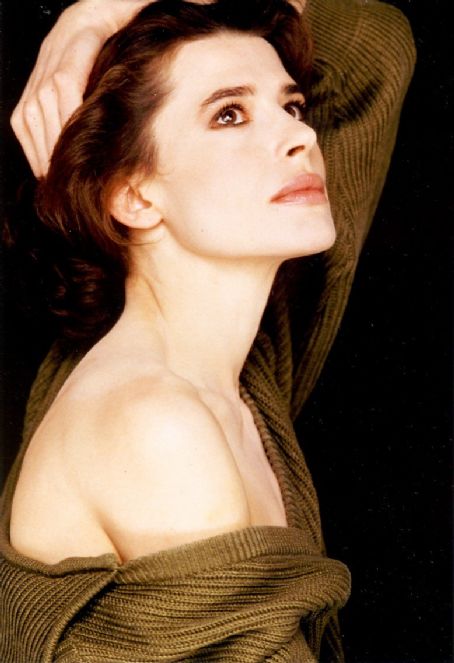
On their previous albums, French string quartet Quatuor Ebène interpreted works by Brahms, Haydn, Debussy, or Fauré. On their new one, they explore their favorite pop stuff like The Beatles’ Come Together, the surf classic Misirlou or Jobim’s Corcovado – a technically brilliant, at times too brainy record which takes ensemble music to quite boring places like Uncle Neil’s Streets of Philadelphia which don’t get hotter if you view them through virtuosos’ glasses. Among the four guest vocalists is French actress Fanny Ardant, doing a calmly intense and intriguing version of James Shelton’s too-seldom covered 1950 classic Lilac Wine. A perfect song for the early hours of New Year’s Day.

Fanny Ardant – Lilac Wine

Vincent Delerm – Fanny Ardant et moi

J’aime on You

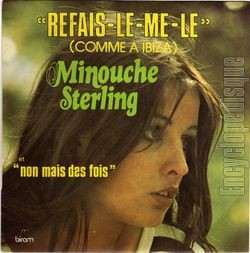
On the b-side of her strange 1975 post-yé-yé folk schlager Refais-le-me-le (comme à Ibiza) – Let’s Do It (Like We Did on Ibiza) in English –, unknown French lolita pop bird Minouche Sterling invented the famous chord progression that was stolen the same year by Shirley & Company for their worldwide smash hit Shame, Shame, Shame.

Sure, you’re right: I made that one up. The producers of Minouche’s unperceived 7“ probably thought that no one would ever play the b-side; it’s one of the most shameless (and funny) rip-offs in French pop history. In fact, Shame, Shame, Shame – written by Sugarhill Records founder and too seldom sung soul/ disco/ rap pioneer Sylvia Robinson and released by the lesser known Linda & The Funky Boys almost simultaneously with Shirley – was one of the first international breakthrough disco/ dance hits, and everybody tried to cash in on the success. In France, television personality Christian Morin did an instrumental version featuring his quite mangy sounding clarinet, while jack-of-all-trades Henri Salvador unleashed a flea bag of a cover version including the rabid replacement of „Shame“ through „J’aime“ – genius! The worst cover was surely done by German 50s overbite idol Peter Kraus – a funk-goes-boof-tah must-have provided by FS confidant Roy Black with the well-meant advice: „Buckle your seat-belt before playing.“

Minouche Sterling – Non mais des fois

Shirley & Company – Shame, Shame, Shame

Linda & The Funky Boys – Shame, Shame, Shame

Henri Salvador – J’aime tes g’noux

Christian Morin – Shame, Shame, Shame

Peter Kraus – Shame, Shame, Shame

UPDATE:

There’s more to the Shame, Shame, Shame story. Soul singer Donnie Elbert recorded a cover of Love is Strange in 1974. He then claimed songwriting credits of Shame, Shame, Shame, saying that his vocals were replaced by those of Shirley Goodman & Jesus Alvarez. The case got real muddy when Shirley & Company followed up S, S, S with Cry, Cry, Cry: same groove, different lyrics. But those lyrics were very similar to Donnie Elbert’s You’re Gonna Cry When I’m Gone, also from 1974. The squabble was never resolved. But wait – there’s also George McCrae’s Rock Your Baby, featuring the licks extraordinaire of guitarist Jerome Smith, one of the unsung heroes of the era. Set to the s(h)ame groove. And he was definitely the first to use it. And he got a nod from John Lennon, who based his Whatever gets you thru the night on, you guessed it, that irresistable groove.

Donnie Elbert – You’re gonna cry when I’m gone
Donnie Elbert – Love is strange
Shirley & Company – Cry, Cry, Cry
George McCrae – Rock your baby
John Lennon – Whatever gets you thru the night

Of course, Shame, Shame, Shame was (like Love is Strange) covered many times. See model Izabella Scorupco’s version here, and see Cher & Tina Turner here.
FS Rerun: Bringing Sexy Back

This one appeared on FS in October 2008 for the first time. More about Sylvia Robinson here.

In the so-called 1972 porn classic Deep Throat, a notably sleazoid threesome featuring Dolly Sharp, Jack Byron and Jack Birch is scored with a delirious funk/ soul track titled Love is Strange. The original version was recorded in 1957 by r&b duo Mickey & Sylvia – i.e. Mickey Baker, the hottest session guitarist of his time, who eventually bought a ticket to France and never came back, and Sylvia Robinson, who at least went temporarily to the Paris of her mind.

In 1973, she recorded a cover of Serge & Jane’s Je t’aime, released on the aptly named Vibration label, transferring Gainsbourg’s spirit to the sultry mood of Spanish language moanings. Her partner in cooing was salsa singer Ralfi Pagan, who provided the Latin lover feel, while Sylvia seemed to practice for her smash hit of the same year, Pillow Talk, a premier bedroom anthem foreshadowing Donna Summer’s disco orgasms. In short: Soul Je t’aime wasn’t perfect, but a sexy mother of a song.

Jack Birch, the stud from „Deep Throat“, became father of Hollywood  star Thora Birch („American Beauty“). Ralfi Pagan was murdered during a tour in Colombia, while Sylvia founded Sugarhill Records in the early 80s, becoming the mastermind behind seminal pre-hiphop outings like the Sugarhill Gang’s Rapper’s Delight: She even played bass on the recording.

Mickey Baker – Parisian Holiday

Mickey & Sylvia – Love is Strange

Deep Throat version of „Love is Strange“

Sylvia Robinson & Ralfi Pagan – Soul Je t’aime

Sylvia Robinson – Pillow Talk

Joyeux Noel (1969 Slight Return)

Today, you buy the New Yorker, GQ, or Entertainment Weekly, but once upon a time, you had those poptastic magazines in which you found great stories by, let’s say, Romain Gary, Henry Miller, Alain Robbe-Grillet, or William Faulkner alongside with cool, though not too glossy shots of the most beautiful women of the world – of course naked, but nobody called it sexist then. Those were the Seventies, and actually, I once worked for LUI, cranking out literary reviews in my small bureau until my senior editor showed up in the evening to take me to those risqué parties on the second floor where I met some of the gals from the photo sessions … and, knowing that they were doing their job exclusively for the advancement of culture, they listened to us breathlessly while we were quoting from Verlaine and Mallarmé poems. Just a few years earlier, in December 1969, LUI even had had Jane on the cover, today still a perfect pic for Boxing Day. And while you’re watching, you might even be in for a little sermon by Cardinal Katerine.

Katerine – Jesus Christ Mon Amour

Mayra Andrade

The Sunday Times called her „voice from Cape Verde“, possibly due to the fact that Mayra Andrade sings a lot of songs in Cape Verdean Creole, though she’s born in Cuba and grew up in Senegal, Angola, and Germany. Her records smell a bit of the well-designed eau de toilette of all those other industry working girls mixing world music with those certain hints of Brazilian folklore, body lotion fado, and authentic leather sofa jazz/ethno feel that probably will earn her a guest job on Charlie Haden’s next „Sophisticated Ladies“ volume. She’s got taste anyway: Her new live album, Studio 105, features also Serge’s La Javanaise, written originally for Juliette Gréco in 1959, in a kind of worn-out sugardaddy’s club version, definitely not as intimate as it tries to be, but actually quite a winning one.

Mayra Andrade – La Javanaise